I want to be upfront from the start. While living in Mexico, my toddler, Ezra, heard multiple languages daily and battled speech delays.
Still, the common worry about bilingual kids talking later!!!!!! didn’t apply for us, hearing a second language doesn’t hinder language development or cause speech delay in toddlers.

Playing with magnetic blocks and turning it into conversation. “What are you building, Ezra?” “Is this the bathroom or the swimming pool?” “Can I go swimming?”
When I’m not fully aware of something, I tend to keep things simple. Other than a ton of research and speaking to professionals, I had a plan in mind.
These are home activities for toddlers with speech delay that I used (or honestly, wish I’d used sooner).
These are things we do daily, and all they do is encourage children to speak more and express themselves with more words.
Simple enough, right?
First things first, so the activities didn’t feel pointless.
At that point, I was a stay-at-home dad, juggling a few Airbnbs and trying to get my blogging business off the ground. To keep things from feeling pointless, I tried these few speech therapy activities.
- Follow my toddler’s lead: If Ezra wanted cars, we did cars. Interest makes for more effort.
- Get face-to-face: I got to his level often so he could see my mouth and eyes.
- Use expectant waiting (3 to 5 seconds): I’d say the word, then I’d wait a few seconds. That quiet space is where he would try to respond.
- Model short phrases with modeling language (1 to 3 words): “More bubbles.” “Open please.” “Car go.”
- Repeat without forcing: I’d model the words again, not demand he repeat. Pressure shuts kids down.
- Keep it playful: If it felt too intense or like homework, we pivoted fast. Keep it fast and loose.
- Aim for many small moments in a language-rich environment: Like parent coaching, five minutes here, and there beats a 30-minute “session.”
For families who use two languages, I kept it simple:
- Model in either language. My Spanish was and still is really bad.
- Teach in small increments (the same few words again and again).
- Avoid code-switching if it seemed to confuse him (I’d do English now, Spanish later).
For simple, easy-to-digest pieces of info on Best Toys for Speech Delay in Toddlers, go no further.
Tracked progress without the stress
- With the trend of keeping things simple, I would focus on a few things and repeat, repeat, repeat.
- “More”
- “Go”
- “Up”
What counts as progress for us (even before words):
- More pointing or showing (make a game out of it)
- New sounds (expressive language steps forward, even silly ones)
- More back-and-forth (turn-taking, copying, building communication skills)
- Less frustration because he could get his message across
Progress doesn’t always sound like a new word. Sometimes it looks like a look, a point, or a tiny try.
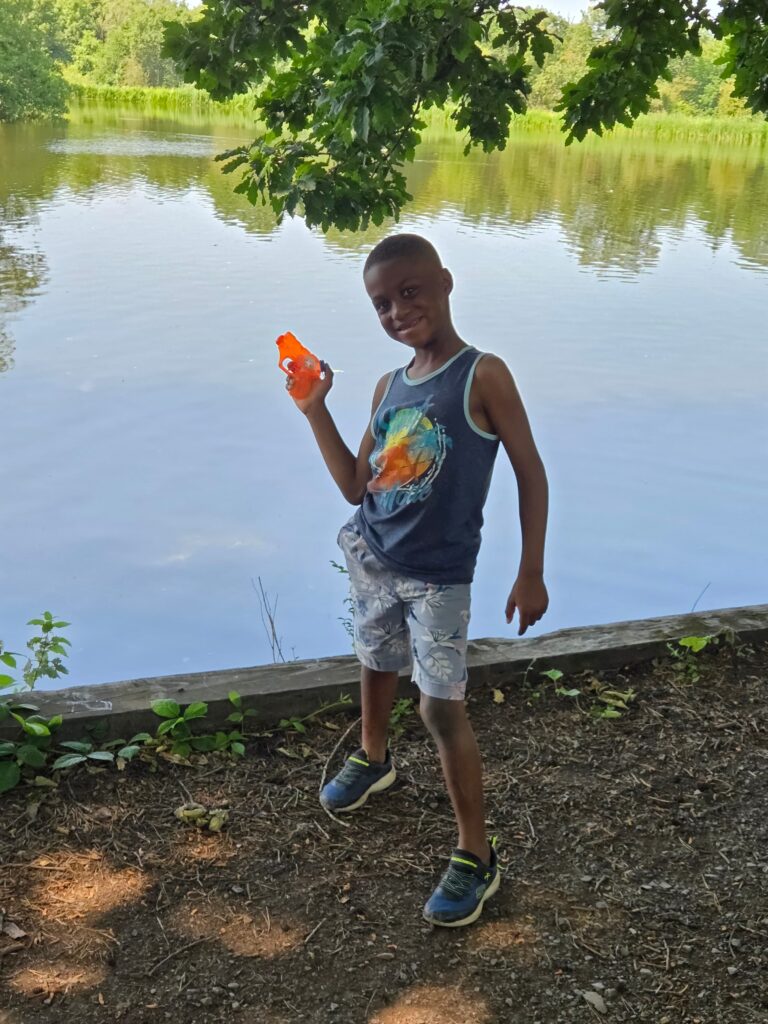
He’s really into water guns, and it naturally pulls him into describing things and starting conversations.
I knew it was time for help when…
I’m not here to scare you. I’m simply here to say the earlier the move, the better.
I reached out (and I’d do it every time) when I noticed patterns like:
- No babbling by around 12 months
- No words by around 16 months
- Loss of skills they used to have
- Limited response to name
- Big frustration around not being understood
- Concerns about hearing (frequent ear infections, not reacting to sounds)
If you’re unsure, start with your pediatrician and ask about a hearing check. It’s a practical first step, and it can rule things out. I also liked this plain-language overview of next steps: toddler speech development tips for parents.
The 12 Home Activities for Toddlers

A simple break from the normal routine, letting conversation and language grow in the middle of everyday life.
These speech therapy activities offer fun, effective ways for toddlers with speech delays to build language development through simple home play.
No Effort play-based learning activities
- Bubble pause game
- What you need: bubbles
- How I do it:
- Blow 1 to 2 bubbles.
- Hold the wand still near your mouth.
- Pause 3 to 5 seconds and look expectant to build joint attention.
- Blow again after a look, point, sound, or sign.
- Phrases to model: “More bubbles,” “Pop,” “Again.”
- Easier or harder: Easier is accept any sound, harder is wait for “more” or “go.”
- Car ramp “ready, set, go.”
- What you need: a toy car, a book, or a couch cushion as a ramp
- How I do it:
- Put the car at the top.
- Say “Ready… set…” then pause.
- Wait for a look or sound, then use parallel talk like “Car fast.”
- Say “Go!” and release.
- Phrases to model: “Ready,” “Set,” “Go.”
- Easier or harder: Easier is “go” only, harder is toddler says “go” or signs it.
- Block tower turn-taking
- What you need: blocks (or plastic cups)
- How I do it:
- I place one block and say, “My turn.”
- Hand a block to my toddler and wait for turn-taking.
- Celebrate any imitation try with positive reinforcement, even if it’s sideways.
- Knock it down with a fun sound.
- Phrases to model: “My turn,” “Your turn,” “Up,” “Boom.”
- Easier or harder: Easier is just “up/boom,” harder is swapping turns without grabbing.
Stop, hear me out. I know what you’re thinking. You need a group that’s everything Dads. Look no further! Join our free Facebook group Fatherhood Uncut
- What you need: animal toys (or pictures)
- How I do it:
- Pick 2 animals only.
- Make one sound and action (cow: “moo,” walk it).
- Pause and wait.
- Copy any attempt, then repeat your model.
- Phrases to model: “Moo,” “Hop,” “Sleep.”
- Easier or harder: Easier is actions only, harder is adding “cow moo” (2 words).
- Pretend snack or kitchen play
- What you need: play food, or real empty containers
- How I do it:
- In this symbolic play, offer two choices and hold them up to practice functional communication.
- Wait quietly with a “tell me” face.
- Respond to the point or reach by labeling: “Apple.”
- Expand a tiny bit: “Want apple.”
- Phrases to model: “Want apple,” “More,” “All done.”
- Easier or harder: Easier is single words, harder is “want + food.”
- Hide-and-seek with a favorite toy
- What you need: one favorite toy, a blanket
- How I do it:
- Hide the toy halfway (let them see).
- Say “Where?” and look around.
- Pause, then reveal: “Here!”
- Celebrate: “Found it!”
- Phrases to model: “Where?” “Here!” “Found it!”
- Easier or harder: Easier is if you do the hiding, harder is toddler hides and you ask.
Everyday routines and sensory activities
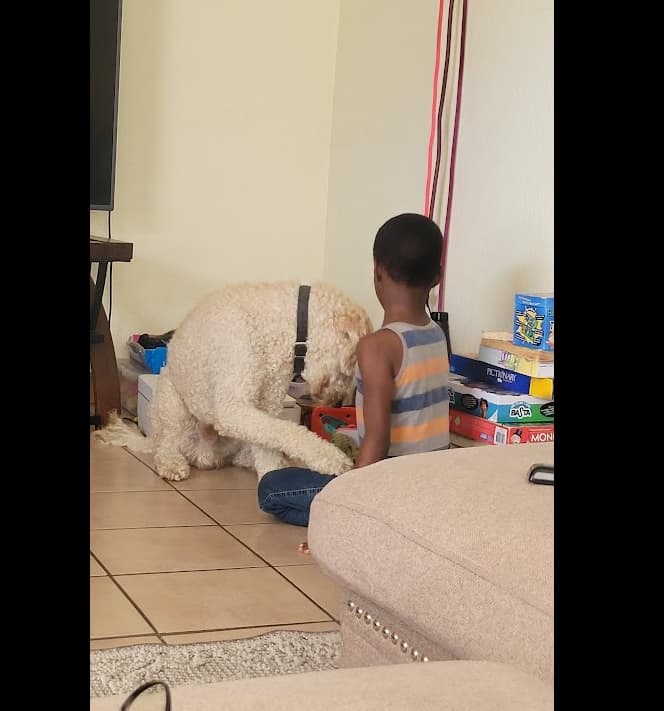
- What you need: two snacks (safe sizes)
- How I do it:
- Offer two choices at eye level to build vocabulary.
- Say “Cracker or banana?”
- Pause 3 to 5 seconds and watch for a gesture.
- Give the choice and label it once.
- Phrases to model: “More,” “Want cracker,” “All done.”
- Easier or harder: Easier is accepting pointing, harder is waiting for a sound or “more.”
- Bath time word loops
- What you need: cups, a washcloth
- How I do it:
- Pick 3 bath words and stick to them in this sensory play.
- Repeat as you do the action.
- Pause before the fun part (big pour).
- Phrases to model: “Pour,” “Splash,” “On,” “Off.”
- Easier or harder: Easier is “splash!” only, harder is “more splash.”
- Mirror face game (copy me)
- What you need: a mirror
- How I do it:
- Sit side by side at the mirror.
- Make one silly face or sound for articulation practice (mmm, ba, oo).
- Pause and wait.
- Copy their face back, then try again.
- Phrases to model: “My turn,” “Your turn,” “More.”
- Easier or harder: Easier is faces only, harder is simple sound copying.
- Picture book “point and pause” reading books
- What you need: a picture book
- How I do it:
- Point and label, “Dog,” to expand vocabulary.
- Pause and look at your toddler.
- If they point or vocalize, respond warmly.
- Re-read favorite pages (repetition helps).
- Phrases to model: “Dog,” “Big dog,” “Night-night.”
- Easier or harder: Easier is labeling only, harder is 2-word phrases.
- Music with actions (gestures first)
- What you need: your voice (that’s it)
- How I do it:
- Choose one action song, like a nursery rhyme.
- Do the gestures slowly and repeat.
- Pause before a key move (hands up).
- Celebrate any gesture as “communication.”
- Phrases to model: “Up,” “Down,” “Again.”
- Easier or harder: Easier is gestures only, harder is a pause for “again.”
- Sticker or dot-marker requests (built-in “help”)
- What you need: stickers or dot markers, paper
- How I do it:
- Keep the stickers in a closed container as visual supports.
- Hand your toddler one at a time.
- Create a gentle problem, “Oh! Stuck.”
- Wait for a look, reach, or sound, then help.
- Phrases to model: “Open,” “Help,” “Stick,” “Again.”
- Easier or harder: Easier is “help” only, harder is “help open.”
Ezra is seven now, and his speech has improved a lot, even though we still have work to do. Although I parent from a distance, I stay involved and keep supporting his steady language growth.
Frequently Asked Questions
What are effective speech therapy exercises I can do with my toddler at home?
There are several speech therapy exercises that you can do with your toddler at home to improve their speech. Some of these exercises include singing songs, reading books, playing games, and practicing sounds.
You can also try using flashcards or picture books to help your child learn new words. It’s important to make these exercises fun and engaging for your child to keep them interested and motivated.
Which toys and games can assist in improving speech in toddlers with delays?
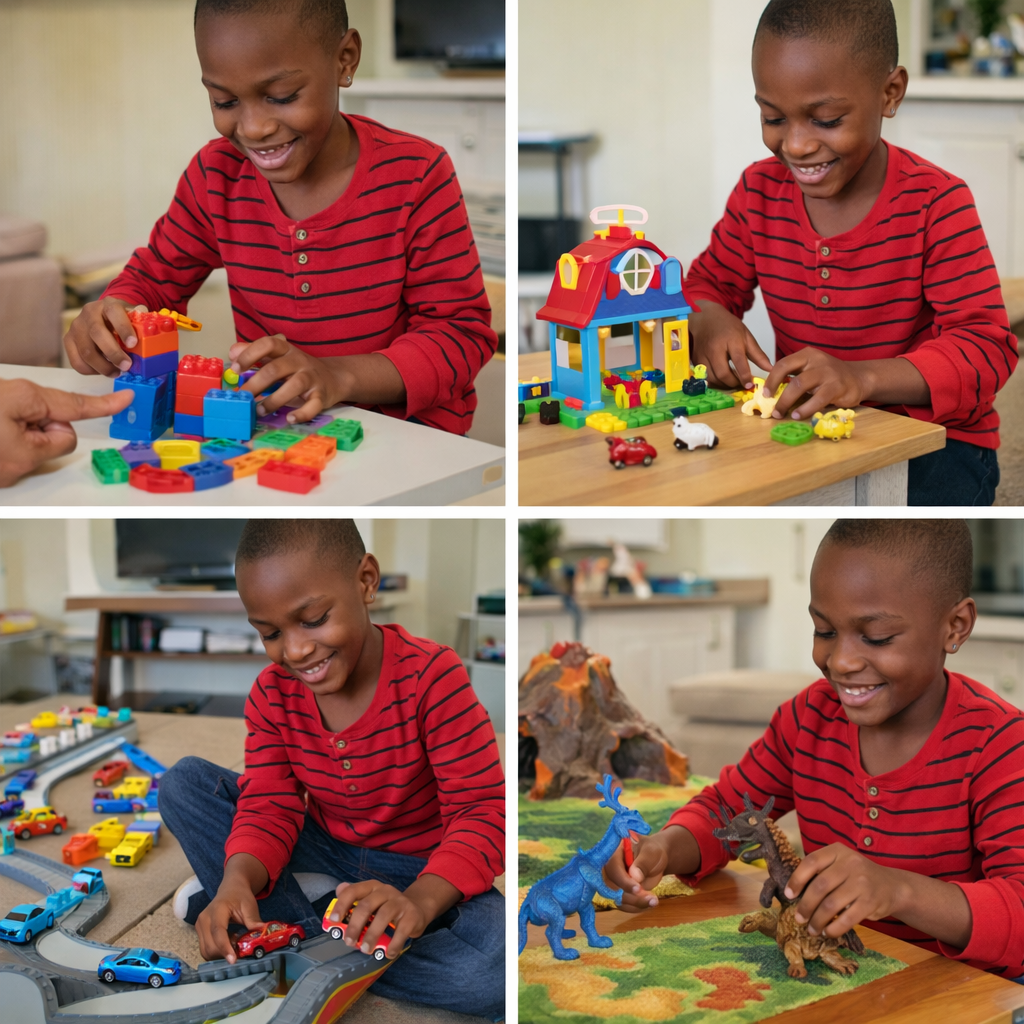
So many toys and games can assist in improving speech in toddlers with delays. Some examples include building blocks, puzzles, dolls, and play kitchens. These toys allow children to practice their language skills while engaging in imaginative play. Board games and card games can also be helpful for practicing turn-taking and conversational skills.
Can you recommend any free printable resources for at-home speech therapy for toddlers?
Yes, there are many free printable resources available for at-home speech therapy for toddlers. Some websites that offer these resources include Super Duper Publications, Speech and Language Kids, and Mommy Speech Therapy. These resources include flashcards, worksheets, and activities that can be used to target specific speech and language goals.
How can I utilize books as a tool for helping my toddler with a speech delay?
Books can be a great tool for helping toddlers with speech delays. Reading books aloud to your child can help them learn new words and improve their vocabulary. You can also ask your child questions about the story to encourage conversation and comprehension. Pointing to pictures in the book and labeling them can also be helpful for practicing speech sounds.
What occupational therapy activities can support speech development in young children?
Occupational therapy activities can support speech development in young children by targeting fine motor skills and hand-eye coordination. Some examples of these activities include drawing, coloring, cutting with scissors, and playing with Play-Doh. These activities can improve the strength and coordination of the muscles used for speech production.
Are there specific activities to help 3-year-olds with speech delays improve their communication skills?
Yes, there are specific activities that can help 3-year-olds with speech delays improve their communication skills. Some examples include practicing sounds and words, engaging in pretend play, singing songs, and playing games. It’s important to make these activities fun and engaging for your child to keep them motivated and interested in practicing their speech skills.
| Join our community and stay updated with the latest insights and resources. Subscribe to our newsletter now! |


One Comment
Comments are closed.