We need to put some respect on our kids’ names; they start building financial literacy long before they ever earn their first dollar, and that progress right there.

That’s not an excuse to fully entertain their curiosity, though; teaching kids about money management starts with everyday life.
This doesn’t have to be formal or hard to follow. Simple, age-appropriate talks about saving, spending, sharing, earning, and planning can build smart money habits for years. The best place to begin is with the basics that kids can see and understand.
Start with the basics so kids can understand
Needs vs wants
Needs versus wants is the genesis of everything financial. A need is something we have to have, like food, shoes that fit, or school supplies.
A want is something we enjoy, like a new toy, candy at checkout, or another stuffed animal when there are already ten on the bed. Practicing delayed gratification with wants teaches kids why waiting can make those joys even better.
I keep this simple because kids don’t need a lecture. They need examples they already know:
- Dinner is a need, while dessert is usually a want.
- Shoes that fit are a need, while light-up shoes in a favorite color are a want.
- A backpack is a need, while the extra keychain clipped to it is a want.
These lessons help kids understand money, make choices, and handle “but I want it” moments.
Money does not fall from trees
For some reason, a lot of kids think money comes from cards, phones, credit cards, or the ATM. They aren’t wrong, but there’s an extension to that income. It must be said plainly: money comes from earning money through hard work, and there’s a limit to how much we have.
That doesn’t mean I give them my whole budget speech; I have and will do so from time to time, but you don’t have to. I catch myself sounding like my parents, saying things like, “I worked very hard for this money, so I want to use it carefully,” or “We can’t buy everything, so we choose what matters most.” Kids can often understand effort. They also understand limits, and it’s our job to keep reminding them.

Money lessons on the go
The best lessons are incorporated in everyday life while you get stuff done, but the narrative can make or break the lessons learned.
- Practicing comparison shopping with two cereal boxes to explain price differences
- Deciding how to use birthday money wisely
- Letting a child pay for one item at checkout
- Explaining the difference between bringing snacks and buying snacks
Short money talks usually work better than long money speeches.
Simplify habits to help kids manage money
Focus on saving, spending, and giving to build strong financial foundations early.
Make saving great again
The best way forward is to show and convince our children that financial habits like saving should become second nature and are in no way a punishment.
Teach a simple rule like the 50/30/20 rule as a percentage guideline for kids to follow, where every time money comes in, allocate portions to savings.
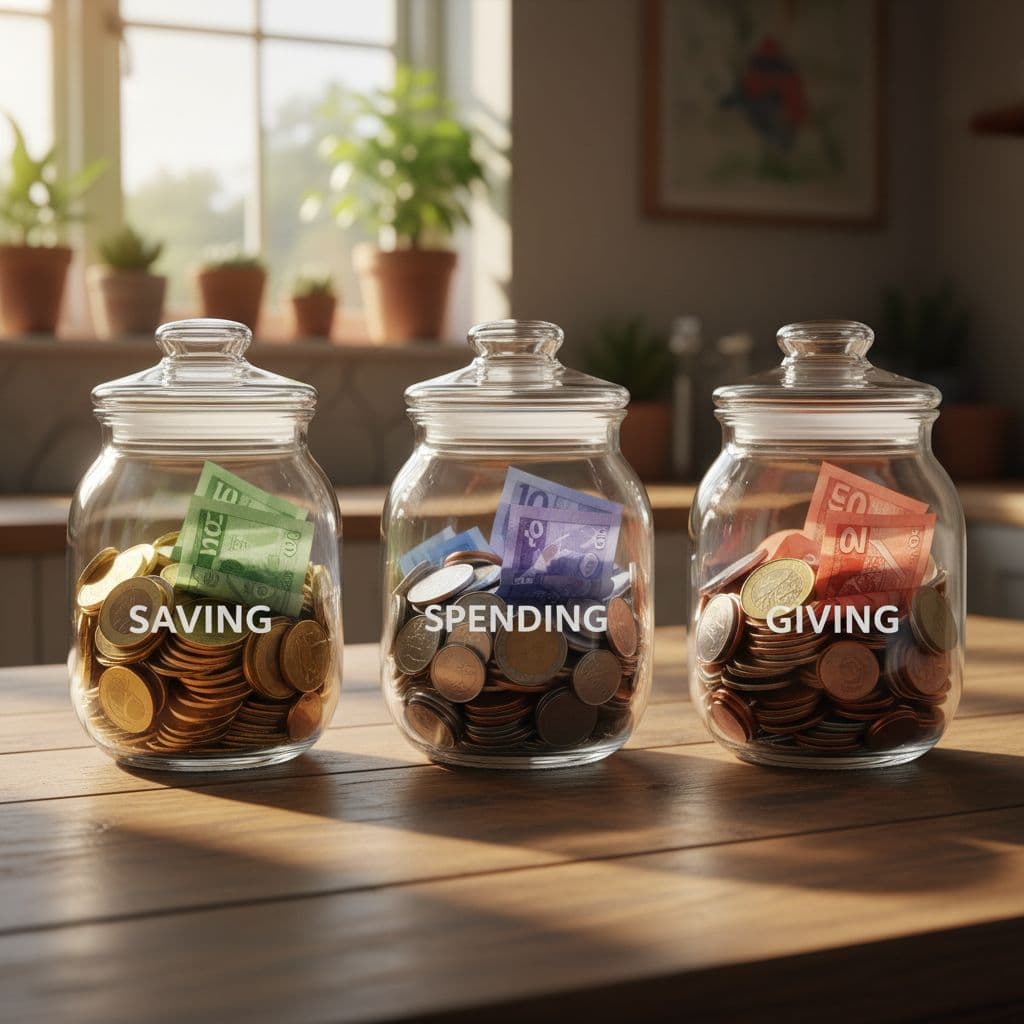
For younger kids, visual tools work best:
- A piggy bank or clear jar for savings (a dark jar makes for less temptation, or maybe not)
- An envelope for spending
- A picture of the savings goals taped nearby
Watching money grow becomes part of the thrill. When kids can see the stack rise, waiting starts to feel real.
Spending with a simple plan
The trick to tempering kids’ spending is helping them slow down that impulsive first reaction. When children see something they want, their first instinct is usually to grab it now and sometimes think later.
That is why building in a short pause before they buy anything. Even a short waiting period helps them step back, consider whether they really want it, and begin to understand that every purchase is a choice. Over time, that small habit teaches a bit of patience, self-control, and better money decisions.
That brief pause goes a long way. Kids begin to see that spending is a choice, not a reflex. If they spend all their money on one small item and regret it later, that can teach an important lesson too.
Teach giving
I remember living in Mexico and at least two weeks out of the month, we would volunteer our time and money to assist travellers. This would come in the form of food, money, or building infrastructure to help with their living situations.
Our kids would see the full picture, which shows why helping others is such a selfless trait. There are numerous ways to show and encourage selflessness, such as picking out canned goods or giving to a charity jar at school.
It all counts and fosters charitable giving.
Commonsense tools for better understanding
Try jars, envelopes, or a simple three-part system
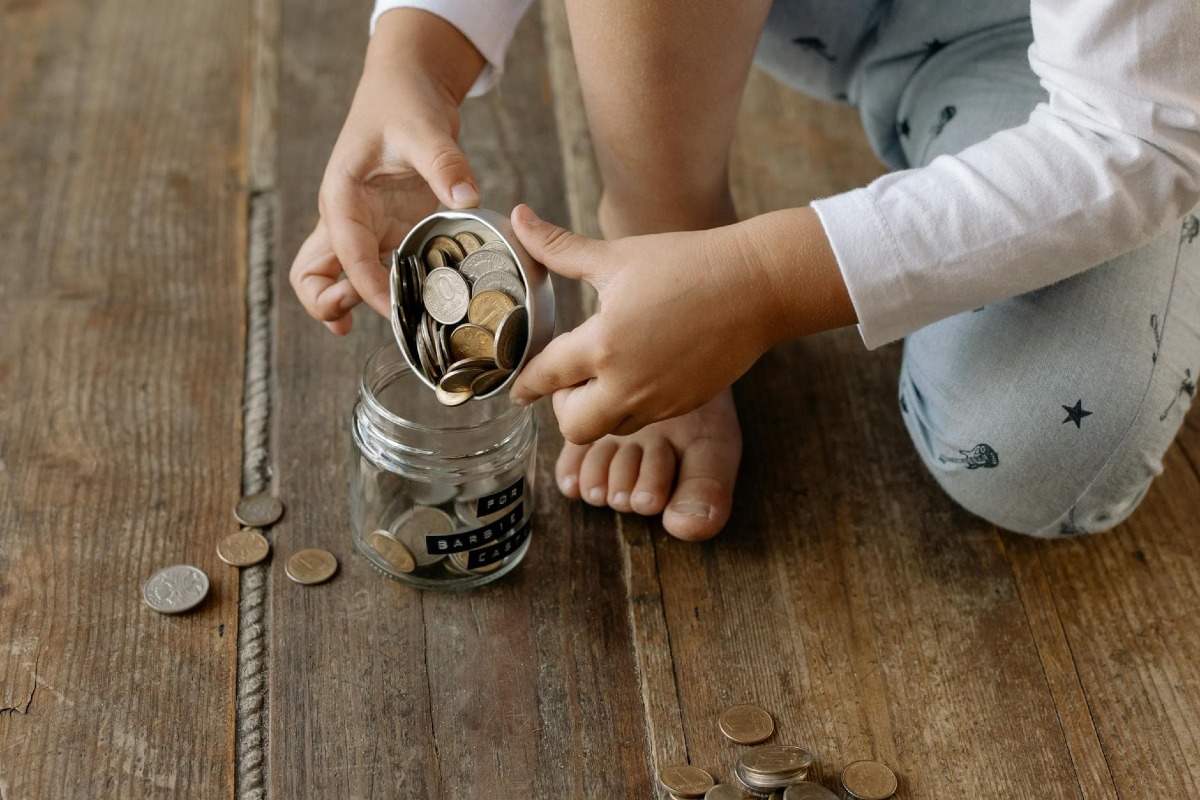
Younger kids learn best when they can see money move. That is why jars and envelopes work so well. When cash gets divided into the saving, spending, and giving systems, the lesson feels realistic.
A simple three-part system is easy to set up at home. You don’t need an app or a fancy tool. Just use a routine kids can follow.
Leverage their allowance
Some employers use 401(k) matching and retirement benefits to encourage long-term saving. We can use a similar idea at home to spark better money habits and teach kids how to manage a budget.
A weekly allowance can help, but only when the rules are clear. The goal is not to hand kids money and hope they learn a lesson on their own. The real point is to give them practice making choices with their weekly allowance.
I like to set the expectations early to build financial responsibility:
- When will the money be given
- What it should be used for
- What parents will still pay for
- What happens if it gets spent right away
If you’re figuring out the earning side, this post on whether children should get paid for chores offers a helpful parent view.
Open a kid-friendly bank account
As kids get older, opening a bank account like their first bank account is the next progressive step. It gives them a place to keep track of money, watch their balance grow, and see that saving does not only happen in a jar on the shelf. For older kids, adding a debit card helps build money management skills through everyday transactions.
Teens might explore basic investment options as another step forward. I like these financial literacy lessons for young learners. The key is choosing a tool that fits the child’s age and attention span.
Real-time money practices
Introduction to small budgets
One easy way to teach kids about money is to give them a small budget, like a mini household budgeting exercise, and let them make choices within it.
That might look like:
- Choosing a snack for $5
- Buying a birthday gift with a set amount
- Comparing prices on school supplies
- Planning one part of a family outing
This is where children begin to see trade-offs. If they spend their money on the big cookie, they may not have enough left for a drink. That helps them learn how money choices work in real life.
A chance to earn money
Children grow into independent adults by taking on age-appropriate household chores at home while they are still young. Regular family chores should be part of that, and extra paid jobs can fit in too, but simple daily tasks should not turn into a paycheck every time.
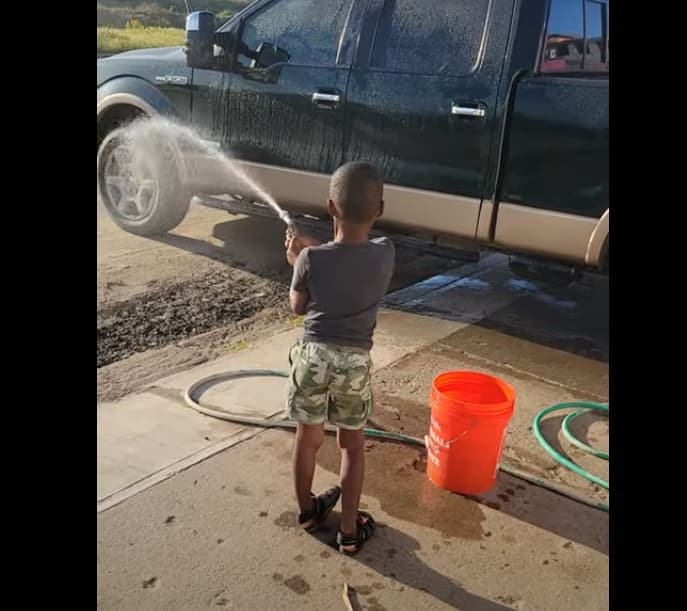
Extra chores, like washing the car, pulling weeds, or helping tidy the garage, help kids connect effort with reward when earning money. That is a valuable lesson. They start to see that money is earned through work, not handed out for free. These early steps pave the way for older children to pursue a part-time job.
No blame, no shame
Picture this: your child spends all their birthday money in one store and proceeds to break the toy before bed. What do you do?
What you’re not gonna do is shame them and make them feel bad. That’s not failure; it’s practice that needs improving. Early mistakes like this help them avoid managing debt later in life.
Ask them a few questions:
- “How do you feel about having nothing to show for your birthday?”
- “What would you do differently next time?”
- “Do you want help making a plan for next time?”
Shame makes kids shut down; we want them to learn not to be embarrassed.
Kids learn money best when lessons stay simple, visual, and patient. Good habits start early and can grow into bigger ideas like emergency funds and compound interest.
That is the heart of good money management, and it starts earlier than most people think.
If I had to choose one place to begin, I would start with the next ordinary moment, at the store, in the car, or with a few birthday bills on the table. This lifelong financial education begins now.
Frequently Asked Questions
At what age should I start teaching kids about money?
Start as early as preschool with simple visuals like needs vs. wants at the store. Younger kids grasp basics through what they see daily, while older ones handle allowances and bank accounts. The key is age-appropriate talks in everyday moments, not formal classes.
How do I teach kids that money doesn’t grow on trees?
Explain plainly that money comes from hard work, using phrases like ‘I worked hard for this’ without a full budget lecture. Let them see limits and effort through chores or comparing prices. Kids understand limits when reminded gently in real life.
What’s the best way to encourage saving?
Use clear jars for savings so they watch money grow, following a simple 50/30/20 split or three-part system. Tape saving goals nearby for motivation. Visuals make saving fun and second nature, not a punishment.
Should I give my kids an allowance?
Yes, with clear rules on when it’s given, what it’s for, and what you still cover. Tie extras to chores to connect effort with earning. It gives practice in choices without just handing out cash.
What if my kid spends all their money impulsively?
Don’t shame—ask how they feel and what they’d do differently next time. A short pause before buying builds better habits over time. Mistakes are practice to avoid bigger issues like debt later.




One Comment
Comments are closed.