I remember growing up hearing the saying, “necessity is the mother of invention, and honestly, I think the same can be said for boredom. Some of the best creativity in children is born in the quiet moments, when there is nothing to do and no screen stepping in to rescue them.
The problem is that, between social media, screens, and the pressure many parents feel to keep kids constantly entertained, we sometimes rob our children of the very space that helps their imagination flourish.
So if you’re reading this, I want to give you 12 reasons why your child being bored is not the worst thing in the world, even if it does come with being bothered every ten minutes.
1. The surprising benefits of boredom for kids: They create their own fun
I have seen the magic happen after a complaint of being bored. First comes, “There is nothing to do.” Then comes pillow forts, made-up rules, paper airplanes, or a strange remake of the game Snakes and Ladders.
When left to their own devices, my kids practice coming up with their own solutions, which is a vital part of developing creativity. By allowing this unstructured time, I am giving them the space to improve their problem-solving skill.
Eventually, they learn to depend on themselves and their own ideas instead of looking to me for constant entertainment.
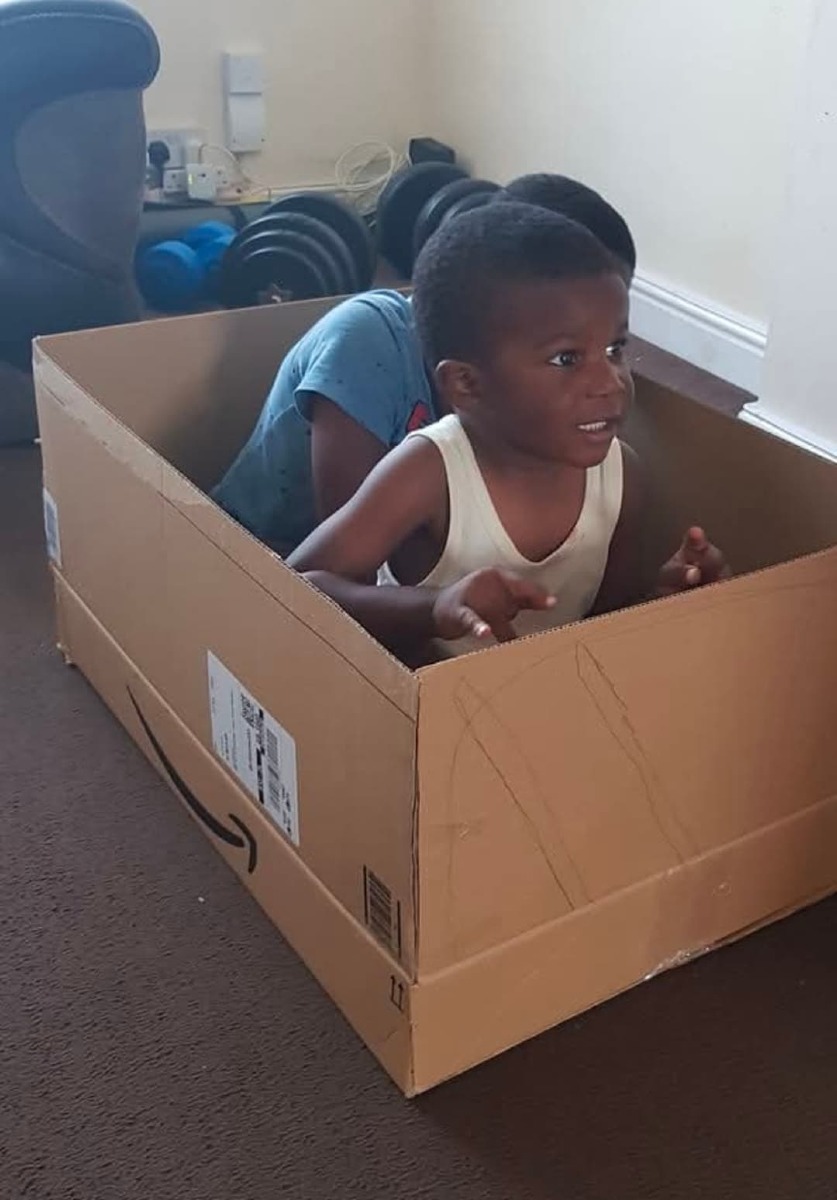
Two bored children transform into a Montserratian Bobsledding team
2. They learn that normal time together matters
I have had visits, like this summer with my boys, where every second feels like it counts. That pressure to provide constant entertainment usually turns a simple weekend into a performance, and kids feel that intensity much faster than we think.
Some of the best connections I have had came from tacos at home, a quick grocery run, and a slow walk after dinner. For parents living apart, tips for staying close to kids long-distance often matter more than trying to outdo the last visit.
Meaningful moments don’t need expensive outings. Laughing on the couch and swapping old memories count too.

3. They learn patience
Patience does not develop in the first few minutes of a quiet moment. We often get tempted to step in, but we must exercise patience ourselves to support their lack of it.
I don’t rush to fill the silence because kids need time to sit with it. Waiting, pausing, and pushing through a boring stretch strengthens their impulse control and gives the prefrontal cortex the practice it needs for better focus and emotional regulation. It is a two-er; it matters for toddlers learning to wait and teens learning to handle restlessness.
Patience like this shows up later in life, in the midst of traffic and hospital visits.
4. They learn emotional comfort
The lesson quietly being taught is that home is a safe space even when nothing is happening. In our modern world, where children are often subjected to constant stimulation, learning to embrace moments of solitude is essential for their long-term psychological well-being.
In cases when parents live in separate locations, and kids move between homes, they need to learn that love does not have a monetary value, is not packed with activities, or is loud.
The real comfort may be hearing me wash the dishes or sitting and watching Formula 1, something they don’t enjoy.
Boredom can be the first step toward that same sense of calm and security.
5. They learn how to be part of your real life
I want my kids to know my actual life, not just the highlights. They need to see how I make breakfast, how I tidy up the house, meal prep, and balance work and play. Learning how to manage these daily routines is an essential life skill that prepares one for adulthood.
At one time, I treated visits like constant, non-stop entertainment, but that has changed. These kids need a real-life way of understanding how the world actually operates. Through thoughtful engagement with the ordinary aspects of my day, they gain a clearer perspective on who I am beyond just their parent.
For them to know the real me, they need to observe me over a period of time, my pace, and my ordinary daily decisions that make up a home.
6. They learn independence
Somewhere between “I’m bored” and “Guess what I’ve come up with” is the gap where independence and autonomy grow.
That gap might be 5 minutes or 45 minutes, but it all counts. When children have the space to engage in solitary play, they are doing much more than just passing the time. They are building the foundation for self-directed play, which is a vital milestone in child development.
By finding their own interests without constant parental intervention, they cultivate a sense of self-motivation that serves them well beyond the living room.
A child who reads, builds, draws, rests, wanders the yard, or invents a challenge without me directing every step is truly a self-starter. It is a tiny miracle to realize that children can survive and thrive without a full events calendar.
I’ve seen the same idea in Psychology Today on bored kids and happiness, boredom is practice in shaping the moment, and that’s how kids learn to trust their own ideas.

7. They learn that connection is not always loud
Some of my favorite dad moments are the quiet ones.
Movie night, or even a lazy afternoon with a film on, and I look over to see them resting against my shoulders. Most of the time, I just sit there and take it all in.
I like the productive moments too, when they are reading and I am at the computer writing about dad things. During these stretches, we trade intense mental stimulation for the simple comfort of empty time. These calm moments are some of the best parts of the day.
They build an easy connection that feels natural and runs deep. Every now and then, a corny dad joke breaks the silence and gets a good five-minute laugh.
8. They learn how to handle disappointment
Disappointment teaches children that they will not always get what they want right away, and that is a crucial part of growing up.
I felt like I never got anything as a child, and I think I am the better for it.
When kids learn to maneuver the boredom that follows a denied request, they begin to develop deep self-regulation skills. They have time to work through those feelings instead of immediately seeking a distraction; they build the resilience and patience needed for better decision-making later in life.
Ultimately, this practice helps them gauge their own impulses and minimizes the need for impulsive risk-taking behavior when they encounter real-world challenges.
9. They learn to talk naturally
Speaking is the most common form of communication, yet both children and adults often struggle to do it well.
Still, people connect naturally over simple shared interests, like grilling, watching an exciting Formula 1 race, or building a Lego castle.
In short, once we force conversation, or anything else for that matter, it stops feeling natural and only gets harder.
I hear more honest stories in boring moments. School worries, friend drama, odd dreams, and random life questions come out when kids feel safe enough to talk.
10. They learn creativity
Creativity is what boredom turns into when nobody interrupts it too soon. When we limit screen time, we give kids the space they need for developing creativity. Kids invent games adults would never think of. They make up songs with terrible lyrics, and they use their imagination to transform couch cushions into borders, lava, boats, or fort walls.
This internal imagination is a muscle that strengthens when screen time is absent. I love that kind of play because it belongs to them. It was not bought, it was not assigned, and it was not copied from a screen.
And sometimes those weird little inventions become family traditions. The made-up handshake, the hallway race, or the rainy-day pancake contest all serve as reminders that play is a natural extension of a curious mind.
11. They learn that rest is part of family time
Visits and holidays for parents parenting from afar can run on over-exaggerated excitement, as we often feel the pressure to make up for the rest of the year.
I’ve learned this approach is usually a mistake. Children become overstimulated very quickly, even when they are having a great time. In a world full of constant stimulation and the persistent lure of digital devices, kids rarely get the chance to simply switch off.
We often mistakenly view downtime as wasted time, but in reality, choosing to rest is a vital part of family time and overall wellness. Stepping back from the busyness helps kids reset and breathe, so they’re better ready for what’s next.

12. They learn that your presence is enough
This might be the biggest one for me.
Kids learn that my presence is enough, even when there are no set plans.
That matters a lot in long-distance parenting, where it is easy to think every call, visit, or holiday has to be memorable on purpose. I have had to remind myself that consistency beats spectacle every day of the week, which is why I keep coming back to predictable parenting routines from afar.
Frequently Asked Questions
Should I feel guilty when my child tells me they are bored?
Not at all. Rather than viewing boredom as a sign of poor parenting, see it as a developmental opportunity that allows your child to build independence and problem-solving skills.
How much screen time is okay when my child is bored?
While screens provide easy entertainment, they often interrupt the creative process, and boredom sets in. It is best to limit screen time during these lulls to encourage your child to find internal motivation and imaginative solutions instead of relying on digital stimulation.
What if my child gets frustrated or upset when they are bored?
Frustration is a normal part of the process, and it provides a valuable teaching moment for emotional regulation. Stay calm and present without immediately rushing to fix the problem; your steady presence provides a secure base for them to eventually move past the frustration on their own.
How can I support my child without constantly entertaining them?
Focus on being present rather than being a performer. Simply involving them in your daily routines—like chores, meal prep, or quiet tasks—teaches them how to be part of your real life while providing the comfort of your company.
The part I try to remember
When a child says, “I’m bored,” I try to stop before jumping in. A little healthy boredom can build patience, problem-solving, creativity, flexibility, and independence without any special plan. When you resist the urge to fix it right away, you help your child move away from boredom-proneness and start finding value in quiet moments.
It can also teach something easy to miss. Home can feel safe without constant entertainment, and time with a parent still matters even when nothing special is happening. If boredom turns into ongoing distress, step in. Otherwise, letting daydreaming take the lead is often the goal.
That blank stretch in the day may be where your child starts learning to trust their own mind and your presence.





3 Comments
Comments are closed.