Once upon a time, not too long ago, I used to find single socks on the couch, a half-built LEGO tower on the table that hinted at childhood creativity, and a cereal spill that looked like a tiny island chain.
Then, my first instinct was to clean it up fast, missing moments to engage in their creativity, and keep it moving.
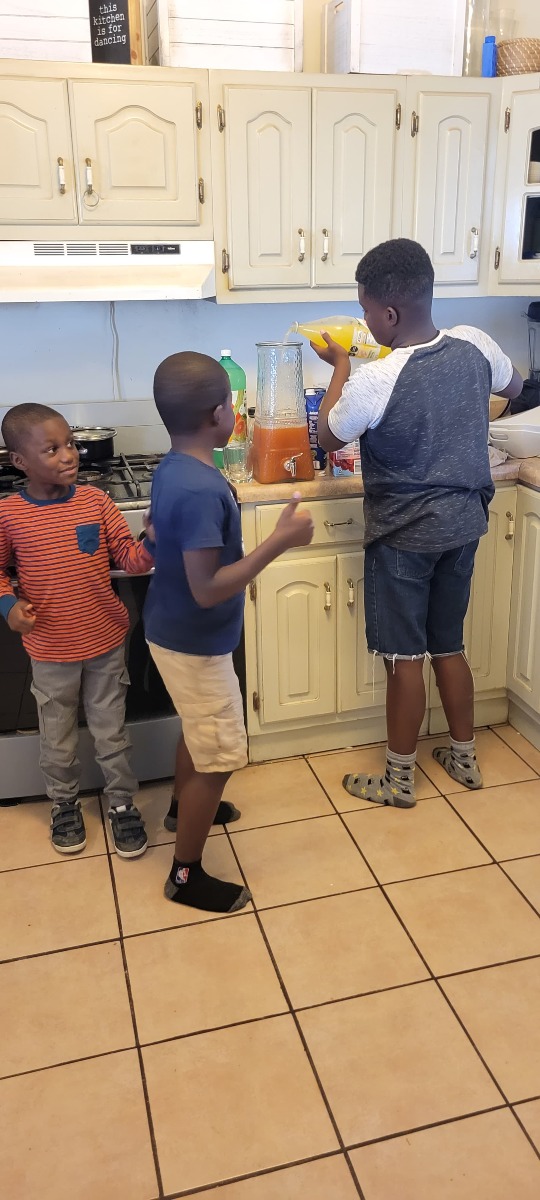
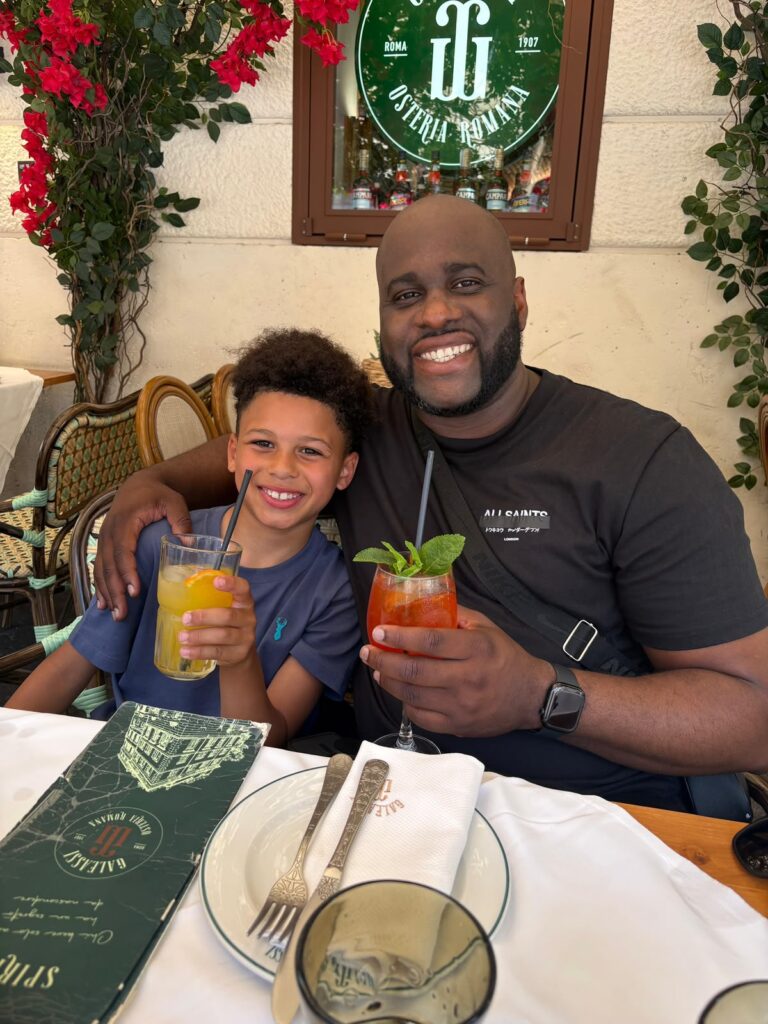
The chefs in the kitchen are experimenting with different drinks for Thanksgiving dinner.
Then I caught myself. Those little interruptions are often where kids’ best ideas begin, because their busy imaginations kick into gear and start lighting up.
When I say creativity, I don’t mean “art class talent.” I mean, trying, imagining, making, and solving problems, when things begin to click, the proverbial lightbulb moment of creative thinking.
In this post, I’m sharing everyday moments that spark new thought processes in kids. The quick prompts that fit into routines we already use daily, plus simple ways to respond so your child keeps creativity long-term.
Daily Habits That Create Ideas
Start with what’s predictable. Daily habits and the usual run of things can feel boring to adults, but for kids, they provide free time as a “stable stage” for imagination and new stories.
Morning, bedtime, and those minutes in-between (shoes on, brushed teeth, waiting by the door) are low-pressure places for unstructured play with ideas.
I try to keep their selections small and optional. If my kids want to swing with it, then great. If not, we keep it moving as if nothing happened.
The goal is to allow creativity to flow like a normal part of life, not a scheduled performance.
I start the story, and they finish it
Use the day as a script. At breakfast, I’ll ask for a two or three-sentence story about what’s coming today: “Beginning, middle, end.” At night, we do the same thing in reverse, with a bit of a twist.
A few prompts that work even when everyone’s tired:
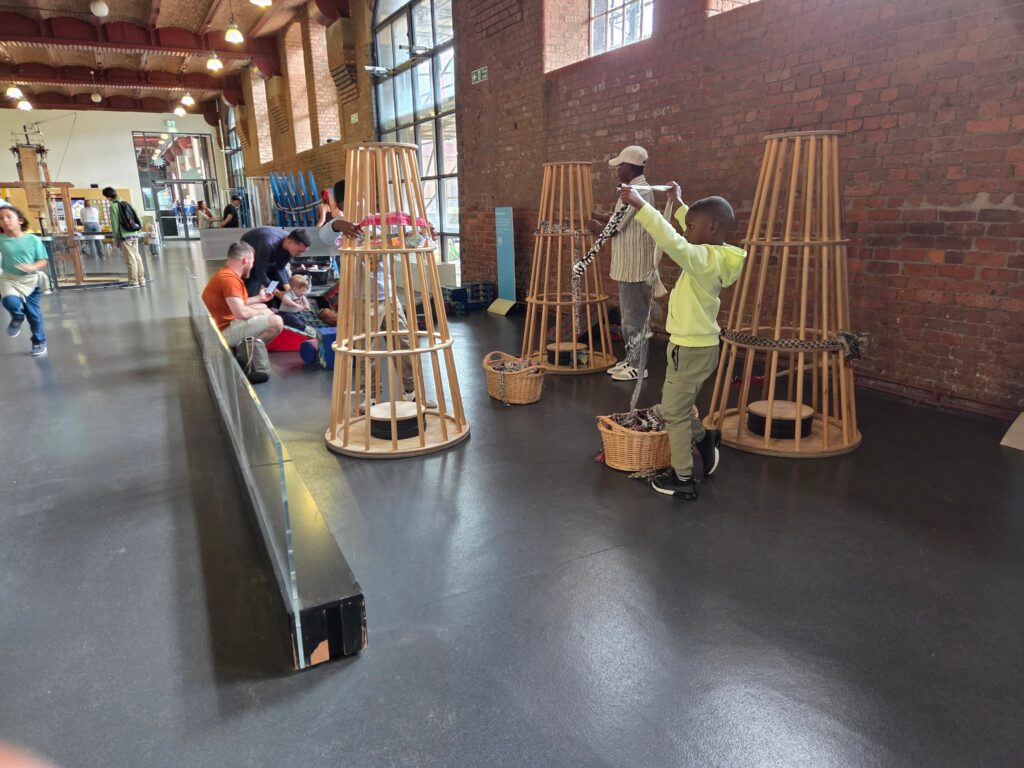
Manchester Museum of Science
- Use what-if questions to invent a new ending to something that happened (the spilled cereal becomes a “map,” the lost sock becomes a “clue” to a hidden treasure).
- Make a superhero based on someone in the family (Grandpa has a bionic leg,” a sibling has “speed-clean hands”).
- Draw one tiny comic panel, just one frame, with a speech bubble.
Keep it pressure-free. Keep it light and fun. Ask open-ended questions, “What happens next?” or “How did they solve it?” That signals interest in their thinking, not just going along for going along.
Reimagining Errands as Play
Turn observation into fuel. The car ride, the checkout line, the bus stop, and the waiting room are packed with little patterns and quirky details. Kids spot the stuff most adults overlook.
I’ll quietly suggest a simple game:
- Spot shapes and repeating colors on signs or packages.
- Make up a soft-voice jingle for a random product.
- Play “what could this become?” with objects (a receipt is a ribbon, a box is a boat).
Unconventional Messy Play
Making mistakes counts as progress. Creativity grows when kids can engage in risk-taking to test, adjust, and try again. That requires a little tolerance for safe mess, plus clear limits, so I’m not stressing the whole time.
Just in case you didn’t believe me, there is research-backed nudge; this goes hand in hand with what many child development writers emphasize: kids build creative confidence through open-ended play and support from adults.
The Greater Good Science Center outlines practical ways to encourage creativity without taking over in six creativity-supporting approaches.
How the Kitchen Becomes a Creative Space
Invite them into real work. I am a strong advocate for welcoming the children into the kitchen, with or without me cooking. There is planning, sequencing, and making choices. I’ll hand over one, maybe two decisions at a time.
Easy hands-on projects that don’t require special ingredients:
- Invent a snack mix with three items (cereal, raisins, pretzels).
- Create a “restaurant” menu, then serve the family with pretend orders.
- Make pattern fruit skewers (red-green-yellow, repeat).
- Rename a smoothie like a potion, with a label and “powers.”
Safety matters, so sharp tools and hot surfaces are left out of the way, choking hazards and allergies are taken seriously.
 Turning Junk Into Real Solutions
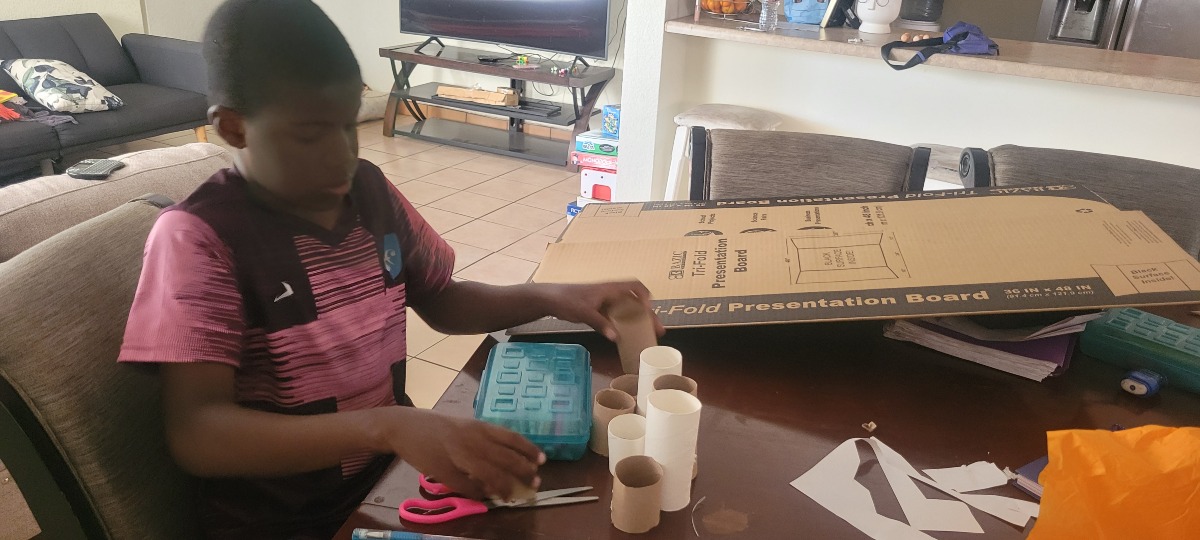
Use the recycling bin like a supply store. Cardboard, tape, bottle caps, paper rolls, and random string serve as open-ended materials that invite kids to design without worrying about “ruining” expensive art supplies. If you want inspiration for setting this up, Motherly describes a simple invention box idea using household “trash”.
When the kids get stuck, a quick method that keeps momentum:
- What’s the goal (a house for a stuffed animal, a robot, a marble run).
- Grab five random materials (box, tape, caps, paper, string).
- Build for 10 minutes without stopping to perfect it.
- Improve one thing (make it taller, stronger, faster, easier to open).
That last step is where the real problem-solving skills pop. Learning that the first version is allowed to be awkward and build from there. These experiences serve as building blocks for growth.
Let the Outdoors Do the Work
Get moving, then think. I’ve noticed ideas arrive faster when kids are in motion. A walk, a sidewalk loop, or even a few minutes on the porch can loosen the mental “stuck” feeling.
This doesn’t require a big yard or a special trip. A tiny park, a patch of weeds by the curb, or a rainy-day puddle can still offer textures, sounds, and new experiences in nature that don’t have one right answer.
Letting Nature Walks Lead the Play
Collect with a purpose. I’ll ask my kid to find three textures, five shades of green, or something shaped like a letter. When we get home, we turn the finds into something simple: a collage, a color chart, or a “museum” with labels.
I keep it respectful and legal. We don’t pick living plants, we leave insects alone, and we follow local rules. The point is noticing details in nature to spark curiosity, not taking.
Letting Kids Invent Their Own Games
The kids are the rule-makers. Instead of teaching a game, I help them invent one. We use what’s around us: sticks, boxes, chalk, or a driveway line.
A few favorites:
- A mini obstacle course, where the kid decides the steps.
- Freeze dance with homemade instruments (pots for drums, a rice shaker).
- Sidewalk chalk “worlds” with rules they create (lava zones, safe islands, secret doors).
When kids control the rules, they practice negotiation and flexible thinking fueled by intrinsic motivation. I stay the helper, not the director.

Hiking to the Waterfalls in Ensenada, Mexico.
How I Respond to Keep Creativity Alive
Protect the creative process. Kids keep creating when they feel safe to try, safe to be imperfect (building a growth mindset), and safe to change their minds. My role is to notice effort, ask better questions, and avoid “fixing” their work in the moment, which reduces their fear of failure.
This approach also supports language growth, because kids explain what they’re making and why. If you want playful ways to build communication during everyday routines, I’ve found this guide on toddler speech delay activities helpful for turning simple moments into talk-rich play.
Describe, don’t rank. “That’s pretty” can end the conversation. I try these open-ended questions that invite more thinking:
- “Tell me about it.”
- “What part was tricky?”
- “What will you try next?”
- “I notice you used a lot of circles here.”
- “How did you decide on that?”
These phrases keep ownership with the child, honoring their creative expression. They also reduce the pressure to impress me.
Boundaries That Make Creativity Feel Safe
Create simple systems. I keep one “creativity bin” with paper, tape, crayons, and safe scissors. I pick a wipeable table spot, and we use a 10-minute clean-up song to close the activity.
I also use plain “mess rules” that are easy to repeat: where we can create, when we can use certain supplies, and what needs an adult. For sensory-heavy play, I pull ideas from sensory play ideas for toddlers and stick to one contained setup at a time.
Limits aren’t the enemy. They’re what let me stay calm, which helps my kid stay curious.
Creativity doesn’t need a special kit or a free afternoon. I see creative thinking grow in routines (mini-stories and errands), hands-on making (kitchen experiments and recycled builds).
The outdoor play (nature noticing and kid-made games), and in how I respond (effort-focused, curious, steady boundaries), all boost cognitive development.
Try a 1-week challenge to nurture their natural creativity: choose one everyday moment per day and turn it into a tiny creative prompt. Pick one idea today, then watch your kid’s creative potential invent when it counts as “normal.”



2 Comments
Comments are closed.