Parenting is partly about preparing our children for a life where, eventually, they won’t need us for every little thing. As hard as that is to admit, that’s the job.
And that preparation goes beyond teaching them to cook a meal or wash their own clothes. It also means knowing they can handle themselves when we’re not in the next room.
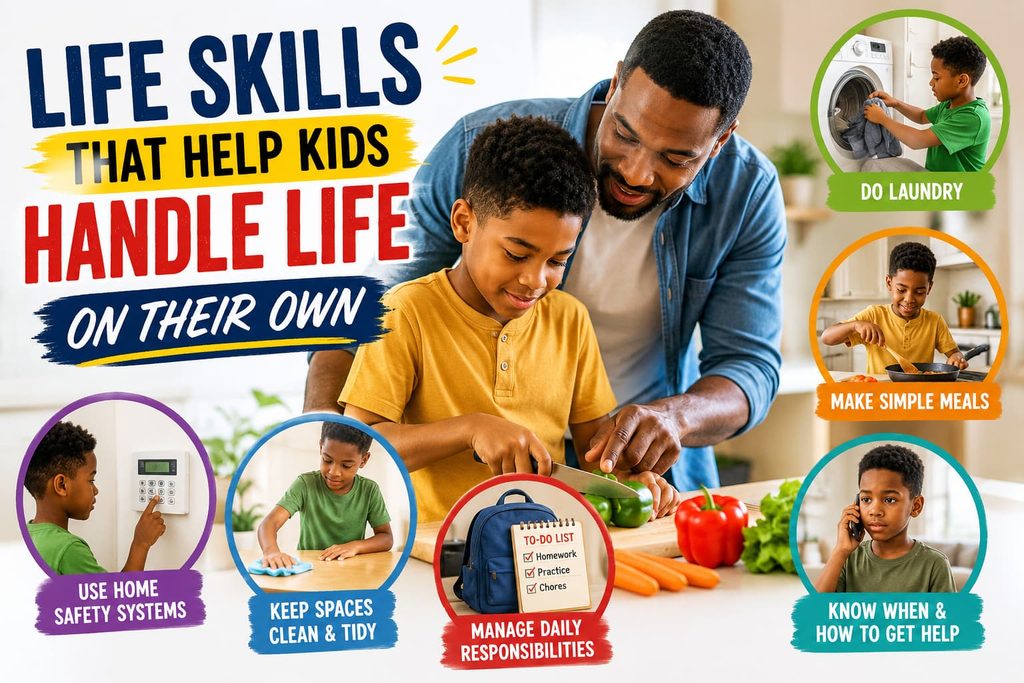
A co-parent might be asleep, sick, stuck at work, or briefly out of the house. Those are the moments when simple life skills suddenly matter.
I don’t want my kids walking around scared of everything that could go wrong. I want them confident enough to know what to do when something does.
That’s what this life skills for kids list is really about: everyday skills that build independence through safety, household responsibility, problem-solving, and knowing when it’s time to ask for help.
Know This Before You Need It
Children learn life skills through repetition and by following our examples. Some follow us around learning everything, while others are stuck in another multiverse. Either way, they need to learn all the things just in case.
A useful starting point includes:
- Knowing their full address and a trusted adult’s phone number.
- Spotting smoke, unusual smells, leaks, and damaged electrical cords.
- Cleaning a small cut and finding a bandage.
- Making a basic meal.
- Running a simple load of laundry.
- Knowing when to leave, call for help, and stop trying to fix things.
The expectation changes with age and child development, including age-appropriate chores. A 5-year-old is learning their address. A 10-year-old should be able to make toast, use the microwave, and grab the first aid kit. An older child can learn more, with close supervision and clear limits.
Financial literacy can start with saving, spending, and understanding prices. Managing money might mean deciding how to use a small amount of pocket money.
Communication skills, social-emotional skills, and emotional intelligence grow when children ask for help, listen, and handle disagreements.
I see independence as a safety net, not a test. Supporting your child’s independence means giving them room to try and sometimes fail, while making sure they know you are right around the corner.
Let’s get into it.
1. Use of a Fire Extinguisher Safely
I remember the first time buying three fire extinguishers and sending them to my partner’s home, feeling good about myself. But it’s not about me, is it?
A fire extinguisher is for a small, contained fire, and only when there is a clear way out. It is not a reason to play firefighter. We teach the kids critical thinking to assess whether the fire is below a child’s ability level.
Our older son knows where the extinguisher is kept. Learning about it can be one of many practical life skills, but using it is never a child’s job. Let them read the instructions with you. Better yet, ask your local fire department if it offers family fire-safety sessions.
Getting out comes first
If there is smoke, spreading flames, or no clear exit, leave immediately. Good decdecision-makingans getting outside, staying outside, and calling emergency services. Build spatial awareness by helping children notice exits and keep a clear route behind them. The London Fire Brigade’s home safety guidance is worth reviewing as a family.
A fire extinguisher can be replaced. A child cannot.
2. Use of a Washing Machine
Laundry is one of those ordinary jobs that builds independence. It also gives children a predictable weekly routine with a chance to feel grown.
Start with the basics: lights with lights, darks with darks, and towels can usually go together. A chore chart can remind them to sort clothes, check pockets, and start the approved cycle.
Show them how much detergent to use. Too much does not mean cleaner clothes. It usually means bubbles, residue, and a headache for whoever finds it later.
Older children can practice time management by planning when to start, transfer, and fold a load. Choose the simplest setting, such as cold or warm regular wash.
Tissues in a washing machine are the tiny white confetti of a parenting nightmare.

3. Simple Meal Prep/Safely
Kids do not need to master a three-course dinner in order to eat a simple meal. A few safe meals would suffice without guesswork, such as cereal, yogurt and fruit, a sandwich, or a microwave oatmeal packet.
Heat needs clear rules
Teach them how oven mitts work. Younger children can use butter knives for soft foods. Older children can learn knife skills through collaboration with an adult or sibling, slowly and without rushing.
4. Use of Emergency Phone Calls
It is very important for our children to know basic information in order for an emergency call to be made.
In case of: fire, a person who cannot wake up, trouble breathing, a major injury, or someone in immediate danger. In the United States, call 911. In England, call 999. Practising this response is a life skill that makes it more doable if it ever comes down to that, so children don’t have to improvise under pressure.
Practice the first three details
Have your child say these out loud:
- Their name and full home address.
- What happened, using plain words.
- Whether anyone is hurt or in danger.
Tell them to stay on the line and answer questions. They should never worry about getting in trouble for calling when they honestly think someone needs help. Essex County Fire and Rescue Service also shares helpful home safety advice for families.
5. Use of a First Aid Kit
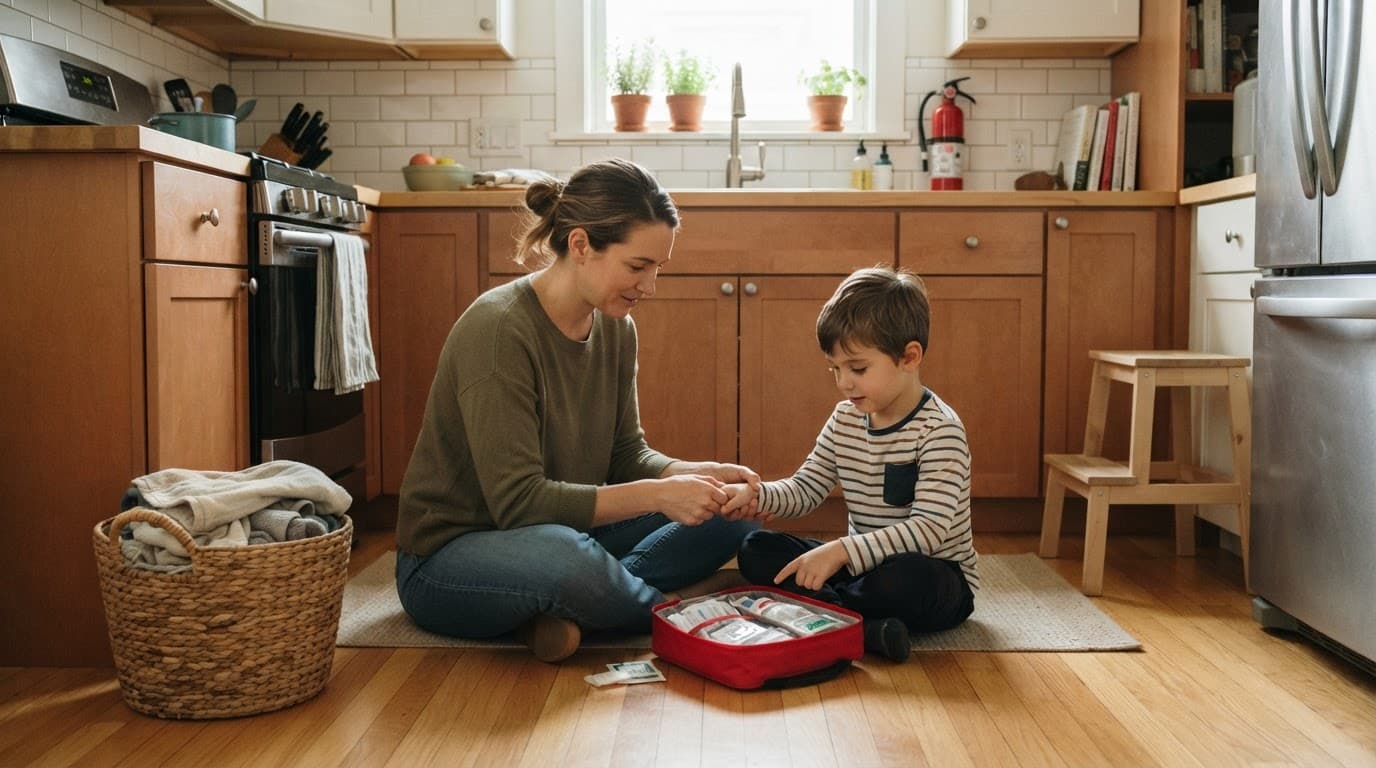
A basic first aid kit should be part of every home. Once in a while, run through where it stays, check its supplies, and what they are used for.
For a small cut, teach them to tell an adult, rinse it with clean running water, and use a clean bandage if needed. They can practise fine motor skills by opening packets and placing a plaster, without touching the wound, digging around it, or using random creams.
They also need to know when a cut is not a small cut. Heavy bleeding, a deep wound, a burn, a head injury, or trouble breathing needs an adult right away. Keep a clear guide on when to call the doctor for your child where caregivers can find it.
6. Knowledge: Common Household Hazards
This part is less about fixing a problem and more about knowing when to stop. Critical thinking helps children notice out-of-the-ordinary occurrences such as a burning smell, damaged cord, or unusual sound.
Teach children to get an adult if they notice:
- Smoke, flames, or a smoke alarm.
- Sparks, hot outlets, damaged cords, or a burning smell.
- A gas smell or hissing sound.
- Water near outlets, flooding, or a ceiling leak.
If they smell gas, they should leave the area and tell an adult. No switches, no candles, no trying to investigate in any way, shape, or form. Problem-solving here means choosing the safest next action: move away, tell an adult, or leave.
For fire safety, a family escape plan is more useful than a speech about staying calm.
Teach them and leave them to it
Every skill I teach my child says, “I trust you to learn. I trust you to handle responsibility. I trust you to grow.“
Mistakes are part of learning, building a growth mindset, independent learning, personal responsibility, and resilience. Emotional intelligence also grows as children recognize their feelings and ask for support.
This is not really about laundry or a fire extinguisher; it is deeper than that. Those are simply vehicles for teaching real-life skills, planning routines, and developing time management.
Practising with family builds collaboration, while an appropriate household role will most certainly nurture leadership skills. Open-ended play offers another way to develop initiative, which may support academic success without making that the goal.
Pick a few skills from this life skills for kids list, practice them regularly, and celebrate the progress. Steady guidance helps children become capable while knowing support is always there.






3 Comments
Comments are closed.